
No, and this is the single most important fact for anyone who has just been told there’s a lesion on their bone. Most bone tumors are benign, meaning they don’t spread to other parts of the body and don’t threaten life. A smaller group is malignant, either starting in the bone itself (primary bone cancer) or reaching the bone from a cancer somewhere else (metastatic bone disease).
The word “tumor” simply means an abnormal growth of tissue. It says nothing about whether that growth is cancerous. A tumor can be a harmless bony bump that never needs treatment, or it can be an aggressive sarcoma that demands urgent, coordinated care. Everything in between exists too. That’s why the finding itself isn’t the answer. The evaluation is.
According to Dr. Aanchal Bhatia, a leading orthopedic oncologist in Bangalore, “A bone lesion on a scan causes enormous anxiety, yet a large share of what we see in clinic turns out to be benign. The real mistake isn’t the worry. It’s skipping a proper evaluation and assuming either way.”
Types of Benign (Non-Cancerous) Bone Tumors
Benign bone tumors are far more common than malignant ones, and many are discovered entirely by accident, on an X-ray taken for a sprain, a fall, or some unrelated complaint. They differ widely in how they behave, which is why each one is approached differently.
Dr. Aanchal Bhatia, Orthopedic Oncologist, explains that many benign bone tumours only require regular monitoring, while others may need treatment based on their size, location, and symptoms.
Osteochondroma:
The most common benign bone tumor. It’s a cartilage-capped bony outgrowth near the growth plate, usually around the knee or shoulder, and often appears during the growing years. Many need nothing more than monitoring.
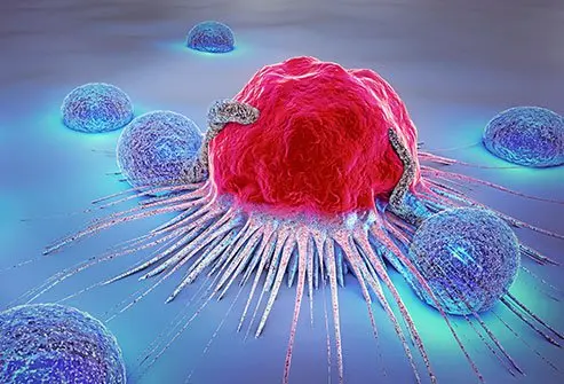
Enchondroma:
A cartilage lesion that forms inside the bone, most often in the small bones of the hands. The majority stay silent for years and are picked up incidentally.
Giant Cell Tumor:
Benign by classification, but locally aggressive in behavior. It typically affects young adults around the knee or wrist, and it can destroy the surrounding bone if ignored, so surgery is usually advised.
Bone Cysts:
Simple bone cysts and aneurysmal bone cysts are fluid-filled cavities that weaken the bone from within. Sometimes the first sign is a fracture after surprisingly minor trauma.
Osteoid Osteoma:
A small lesion with an outsized reputation for pain. The classic story is night pain that improves dramatically with anti-inflammatory medication.
Fibrous Dysplasia and Non-Ossifying Fibroma:
Developmental conditions where normal bone is replaced by fibrous tissue. Many resolve or stabilize on their own, though larger lesions need attention.
Here’s the part patients often miss. Benign does not always mean harmless. Some of these lesions grow steadily, thin out the bone until it fractures, or press on nerves and joints. A few, like certain cartilage tumors, carry a small long-term risk of malignant change. So even a benign diagnosis deserves specialist follow-up rather than a shrug.
A lesion on your scan doesn’t have to mean cancer. But it does deserve an expert opinion. Get it evaluated before the guesswork takes over.
How Doctors Determine Whether a Bone Tumor Is Cancerous
There’s no single test that settles the question. The diagnosis is built in layers, with each step narrowing the possibilities before the next one begins.
Clinical History and Examination:
Age is a powerful clue, since different tumors favor different age groups. Pain pattern, swelling, how long the lump has been there, any trauma, and any previous cancers all point the assessment in a direction before a single scan is ordered.
Imaging:
Plain X-rays come first, and they reveal more than most people expect. The lesion’s borders, location, and effect on surrounding bone often suggest benign or aggressive behavior straight away. MRI then maps the soft tissue and marrow extent, CT defines bone architecture and screens the lungs for spread, and PET scans help with whole-body staging when malignancy is suspected.
Biopsy:
Imaging suspects; biopsy confirms. A sample of the tumor is taken, either through a needle (percutaneous) or a small open procedure, and sent for analysis. The biopsy tract is planned with surgical precision so that it can be removed along with the tumor later if cancer is confirmed.
Histopathology:
A pathologist, ideally one experienced in musculoskeletal tumors, examines the tissue to classify the tumor type and grade. This final report is what fixes the treatment plan.
Biopsy planning sounds like a small technical footnote. It isn’t. A poorly placed biopsy can contaminate healthy tissue and shut the door on limb-preserving surgery later. This is precisely why suspected bone tumors should be evaluated by an orthopedic oncologist from the very first step, not after a problem has already been created.
Treatment Options for Bone Tumors
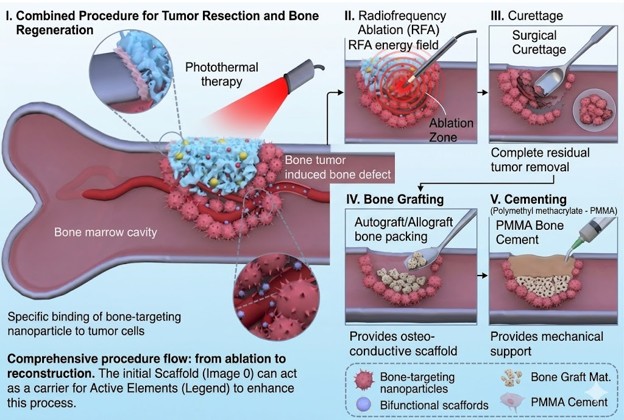
Treatment depends entirely on what the tumor is, where it sits, how it behaves, and what the patient needs from that limb. The range is wide, from doing nothing at all to complex reconstructive surgery.
Observation:
Many benign lesions, especially incidental osteochondromas and enchondromas, need nothing beyond periodic imaging to confirm they’re stable. No surgery for the sake of surgery.
Curettage and Bone Grafting:
The tumor is scraped out of the bone and the cavity is filled with bone graft or cement. This is the standard approach for contained benign tumors such as giant cell tumors and active bone cysts.
Limb Salvage Surgery:
For malignant tumors, the affected bone segment is removed completely with safe margins while the limb itself is preserved. The defect is then rebuilt, restoring function rather than sacrificing it.
Endoprosthetic Reconstruction:
The resected bone or joint is replaced with a custom metal prosthesis, commonly around the knee or hip, allowing patients to walk again after major tumor removal.
Biological Reconstruction:
Techniques such as extracorporeal radiation therapy (ECRT) and cryotherapy treat the patient’s own bone and reimplant it, an approach Dr. Bhatia has published research on in the Journal of Orthopaedic Science.
Chemotherapy and Radiation:
Sarcomas like osteosarcoma and Ewing’s sarcoma typically need chemotherapy sequenced around surgery, coordinated closely with medical and radiation oncologists as part of a multidisciplinary plan.
Rotationplasty or Amputation:
Reserved for cases where limb salvage isn’t oncologically safe. Even then, the goal remains the maximum possible function
Because the stakes differ so dramatically between a harmless osteochondroma and a high-grade osteosarcoma, no two treatment plans look alike. Each one is built around the specific tumor, the specific bone, and the specific person carrying both.
The right treatment starts with the right diagnosis, and the right diagnosis starts with a specialist who handles bone tumors every day.
Frequently Asked Questions
1. Are most bone tumors cancerous?
No. Most bone tumors are benign and do not spread to other organs.
2. Can a benign bone tumor become cancerous?
Rarely. Some cartilage lesions carry a small risk, which is why follow-up imaging matters.
3. What are the warning signs of a malignant bone tumor?
Persistent bone pain, night pain, swelling, or a fracture after minimal trauma.
4. Do all bone tumors need surgery?
No. Many benign tumors only need observation with periodic imaging.
5. Who should evaluate a suspected bone tumor?
An orthopedic oncologist, since biopsy planning affects all future treatment options.