
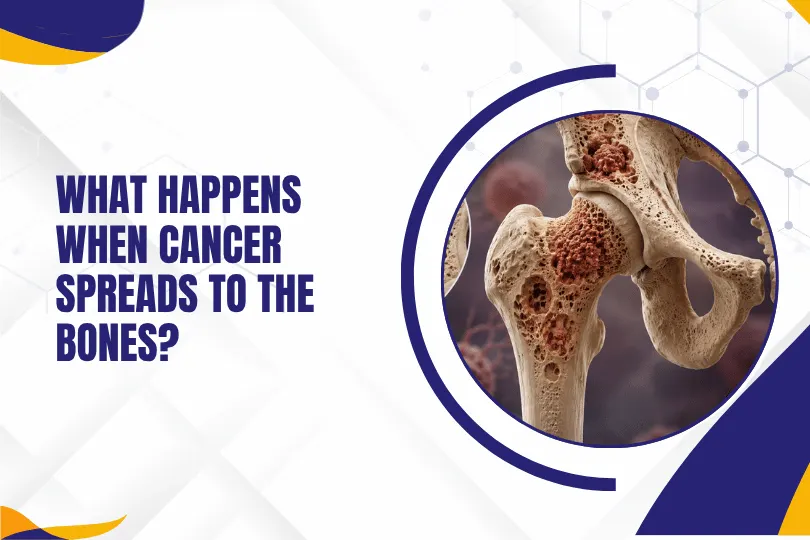
Bone metastasis starts when cancer cells break away from their original site and settle inside bone. A common route for advanced breast, prostate, lung, and thyroid cancers. Once cancer moves in, the bone’s normal cycle of building and breaking down stops working properly, and that disruption is where the real damage begins. What follows deserves a closer look, not a passing mention.
According to Dr. Aanchal Bhatia, orthopedic oncologist in Bangalore, “Bone metastasis isn’t the same as cancer that starts in the bone. It’s cancer from another part of the body showing up in a new place, and treating it that way changes everything.”
What Symptoms Does Bone Metastasis Cause?
Bone under attack from metastasis doesn’t stay quiet for long. A handful of patterns show up again and again, and none deserve a shrug. Patients often describe the first weeks as feeling “off” rather than sick, which is exactly what makes it easy to miss.
Persistent, worsening pain: Not the soreness that fades with rest. It sits in one spot, digs in at night, and painkillers barely touch it after a while.
Fragile bones and fractures: The bone thins out from within, sometimes silently. So a break can happen from something as small as bending down, and that fracture is often the first real sign something is wrong.
High blood calcium: Bone breakdown outpaces rebuilding, and calcium ends up in the bloodstream where it shouldn’t be. Nausea and confusion follow, and if it’s ignored long enough, this turns into a genuine emergency.
Spinal cord compression: Metastasis near the spine can crowd the cord itself. Weakness, numbness, trouble controlling the bladder, none of it should be met with a wait it out approach.
Bone pain doesn’t always mean metastasis, but a cancer history changes how seriously it needs to be taken. Learn more about bone cancer treatment options available in Bangalore.
New bone pain after a cancer diagnosis is never something to sit on. Get it looked at properly.
How Do Doctors Diagnose and Treat Bone Metastasis?
Once metastasis is suspected, things move fast. There’s a reason for that urgency.
Imaging comes first: A bone scan or PET-CT catches metastasis earlier than a standard X-ray, especially with small lesions. And MRI gets added when the spine looks involved.
Blood tests check calcium and markers: Calcium and alkaline phosphatase numbers climb when bone involvement is active. Doctors keep an eye on these right through treatment, not just at the start.
Bone-strengthening medication: Bisphosphonates or denosumab put the brakes on bone breakdown, which is what’s driving the pain and fracture risk in the first place. They won’t touch the metastasis itself. But they cut complications down noticeably.
Radiation and surgical stabilization: Radiotherapy eases pain and shrinks the lesion in many patients. When a bone looks likely to break, stabilizing it surgically happens before the fracture, not after.
Metastatic bone disease isn’t the same fight as a primary bone tumour, and mixing the two up changes the treatment path entirely. Our piece on malignant bone tumors breaks down how the two get separated.
Why Choose Dr. Aanchal Bhatia for Bone Metastasis Care in Bangalore?
Dr. Aanchal Bhatia did her Fellowship in Musculoskeletal Oncology at Max Super Speciality Hospital, Saket, New Delhi, and metastatic bone disease was as much a part of that training as primary bone sarcomas were. She’s a member of the Indian Musculoskeletal Oncology Society (IMSOS) and has 12 peer-reviewed papers to her name. Her practice doesn’t dabble in general orthopaedics on the side. It’s only bone and soft tissue tumour cases, metastatic disease included. Every case is coordinated with the patient’s medical oncologist rather than managed in isolation, since pain control, fracture prevention, and cancer treatment work best when they move in the same direction.
Stabilising a bone before it breaks carries the same weight here as treating the cancer behind it. Surgery, when it’s needed for stabilisation or symptom relief, gets planned around what actually suits the patient’s prognosis and quality of life, not a standard checklist. Patients leave with a realistic sense of what’s coming, not just a list of procedures.
Frequently Asked Questions
1. What does it mean when cancer spreads to the bones?
It means cancer cells travelled from elsewhere and took hold in the bone.
2. Which cancers most commonly spread to bone?
Mostly breast, prostate, lung, and thyroid cancers, in that rough order.
3. Can bone metastasis be cured?
Rarely curable. But treatment holds off progression and keeps pain manageable.
4. How is the diagnosis confirmed between the two?
No. It’s cancer that started elsewhere, not a primary bone cancer.
Reference
Disclaimer: This article is for educational purposes only and does not replace professional medical advice; please consult a qualified orthopedic oncologist for diagnosis and treatment.