Quick Summary
Conditions treated
Soft tissue sarcomas affecting the muscles, fat, nerves, blood vessels, tendons, and connective tissues, including both localized and advanced tumors.
Provider
Dr. Aanchal Bhatia, Fellowship-trained Orthopedic Oncologist with expertise in the diagnosis and surgical treatment of soft tissue sarcomas.
Treatment plan
Personalized treatment plans with a focus on limb-salvage surgery whenever oncologically appropriate, combined with multidisciplinary cancer care.
Location
Consultations available at Medicover Hospital, Manipal Hospital Malleswaram, Rangadore Memorial Hospital, and Bone Tumour & Sarcoma Care Centre. Second opinions are welcome.
Soft Tissue Sarcoma Treatment in Bangalore
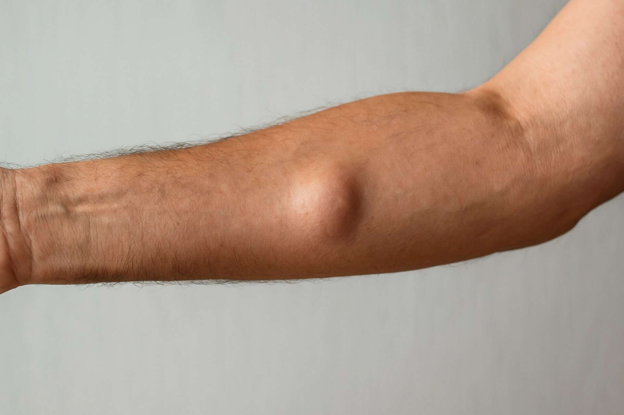
Have you noticed a lump that’s slowly getting bigger? Don’t ignore it, especially if it’s painless.
Most lumps are not cancerous, but if the lump gets bigger, it may be a soft tissue sarcoma, a rare type of cancer that develops in the muscles, fat, nerves, blood vessels, tendons, or other soft tissues. If the lump persists, continues to grow, or measures more than 5 cm, it is important to seek professional advice.
If you’re dealing with a soft tissue sarcoma or a persistent lump, you’re not alone. Dr. Aanchal Bhatia offers personalized treatment designed specifically for your condition. She provides treatment through a multidisciplinary approach, with the goal of effective treatment and helping maintain function and quality of life.
Types of Soft Tissue Sarcoma Treated by Dr. Aanchal Bhatia
There are several subtypes of soft tissue sarcomas, which can occur in various areas of the body. Treatment depends on the type of sarcoma, the size of the tumour, its location, and whether the disease has spread.
Dr. Aanchal Bhatia manages a wide range of soft tissue sarcomas, including:
Liposarcoma
A sarcoma that develops in fat tissue and commonly occurs in the thighs, abdomen, or the retroperitoneum (the area behind the abdominal organs). It is more frequently diagnosed in adults.
Leiomyosarcoma
A malignant tumour that arises from smooth muscle tissue. It can develop in blood vessels, the uterus, abdomen, or limbs.
Synovial Sarcoma
A rare cancer that usually affects adolescents and young adults. It commonly develops near joints, particularly around the knees, ankles, and upper limbs.
Undifferentiated Pleomorphic Sarcoma
One of the more common soft tissue sarcomas in adults, often occurring in the arms or legs and requiring specialized surgical treatment.
Myxofibrosarcoma
A type of soft tissue tumour that is often seen in older people, typically in the limbs. It may be more likely to recur locally if not treated appropriately.
Other types of soft tissue sarcomas are extremely rare.
Dr. Aanchal Bhatia also diagnoses and treats a variety of other benign and malignant soft tissue tumors that need particular orthopedic oncology treatment.
Have you noticed a painless lump that is growing?
Early evaluation supports timely diagnosis and appropriate treatment. Book a consultation for a comprehensive assessment.
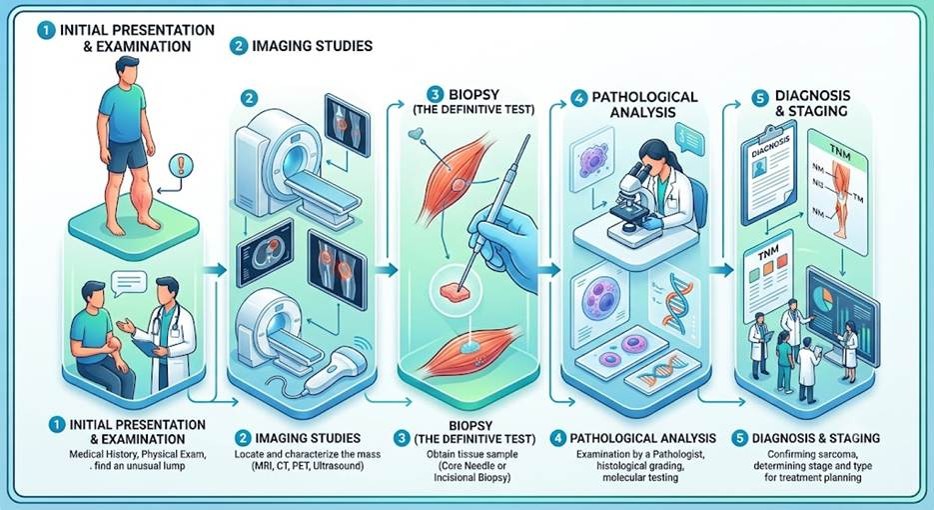
How Is Soft Tissue Sarcoma Diagnosed?
Not every lump is cancer—but every growing lump should be checked.
The diagnostic process may include:
Medical history and physical examination
Ultrasound for superficial soft tissue lumps
MRI to assess the tumour’s size and extent.
CT or PET-CT scan, if needed
Blood tests, where indicated.
Biopsy to confirm the diagnosis
A biopsy is the most important step in identifying the exact type of soft tissue sarcoma and planning the right treatment.
Why Is Limb Salvage Surgery Preferred?
Advances in orthopedic oncology have made limb-salvage surgery the preferred treatment for many patients with soft tissue sarcoma. The goal is to completely remove the tumor while preserving the affected limb whenever it is safe from an oncological standpoint.
Depending on the individual case, treatment may include:
Limb-Salvage Surgery
Surgical removal of the tumour while preserving important muscles, nerves, blood vessels, and limb function whenever possible.
Soft tissue tumor surgery
Surgical removal of the tumour with adequate margins to reduce the risk of recurrence while preserving healthy tissue whenever possible.
Reconstruction Procedures
Reconstructive surgery, including muscle flap surgery, skin grafts, and other reconstructive procedures, can be used to help restore function and healing if a large amount of tissue has been removed in the course of surgery.
Chemotherapy and Radiation Therapy
Depending on the nature, grade and stage of the sarcoma, some patients may need chemotherapy and/or radiation therapy before or after surgery. These treatments are integrated with a multi-disciplinary cancer care team.
Each treatment strategy is individualised according to the patient’s diagnosis, health status and functional objectives.
Recovery After Soft Tissue Sarcoma Treatment
Recovery is different for every patient, but with the right care and rehabilitation, you can gradually return to your daily routine.
Hospital stay:
The duration depends on the type of surgery and your overall recovery.
Wound care:
Your surgical wound will be monitored to ensure it heals properly.
Physiotherapy:
Helps restore strength, mobility, and function while improving your confidence to move again.
Gradual return to activities:
Your doctor will guide you on when it’s safe to resume work, exercise, and daily tasks.
Regular follow-ups:
Routine check-ups and imaging help monitor your recovery and detect any signs of recurrence early.
Rehabilitation:
An important part of recovery that helps you regain independence and improve your quality of life.
Looking for a second opinion for a soft tissue sarcoma diagnosis?
Get a full assessment, a detailed examination of your current reports, and individualised treatment suggestions to help you make educated choices regarding your treatment.
Why Choose Dr. Aanchal Bhatia for Soft Tissue Sarcoma Treatment in Bangalore?
Fellowship-trained Orthopedic Oncologist
specializing in bone cancer and soft tissue sarcomas.
Extensive experience
in the diagnosis and surgical management of complex soft tissue tumors.
Focus on limb-salvage surgery
whenever it is oncologically safe.
Personalized treatment
plans based on the tumor type, grade, size, and location.
Multidisciplinary care
coordinated with medical oncologists, radiation oncologists, radiologists, pathologists, and rehabilitation specialists.
Expertise
in advanced tumor resection and reconstructive procedures.
Comprehensive second-opinion consultations
for newly diagnosed and recurrent soft tissue sarcomas.
Associated with leading hospitals
in Bangalore for the diagnosis and treatment of bone and soft tissue tumours.
Frequently Asked Questions
1. What are the signs of soft tissue sarcoma?
Most of the time, soft tissue sarcoma (STS) is a painless bump that slowly grows. The tumor can compress nearby nerves or muscles, causing pain, swelling or loss of movement for some patients.
2. Are all soft tissue lumps cancerous?
No. Most soft tissue lumps are benign. However, any lump that continues to grow, measures more than 5 cm, or causes persistent symptoms should be evaluated by an orthopedic oncology specialist.
3. Does soft tissue sarcoma always require surgery?
For most soft tissue sarcomas that are localized, the main treatment is surgery. In certain cases, chemotherapy or radiation therapy may also be recommended.
4. Can soft tissue sarcoma spread to other parts of the body?
Yes. In some cases, soft tissue sarcomas can metastasize (spread) to the lungs. Early diagnosis, appropriate treatment, and regular follow-up help reduce the risk of recurrence and improve outcomes.
5. How long does it take before a person recovers from surgery for a soft tissue sarcoma?
Some recovery time is dependent on the size and location of the tumor and the amount of surgery. Most patients need follow-up and rehabilitation and can expect to recover over a period of weeks to months.