Quick Summary
Conditions treated
Diagnosis
Treatment approach
Treatment planning
Specialist care
Consultation
Bone Cyst Treatment in Bangalore
Finding a “bone cyst” on an X-ray or scan can naturally raise questions about whether it is serious or requires treatment.
Most bone cysts are benign, but some can cause pain, weaken the bone or increase the risk of fracture. Treatment depends on the cyst’s type, size, location, the patient’s age and overall bone health. Dr. Aanchal Bhatia provides specialist evaluation for bone cysts and other bone lesions in Bangalore, with treatment or monitoring planned according to each patient’s needs.
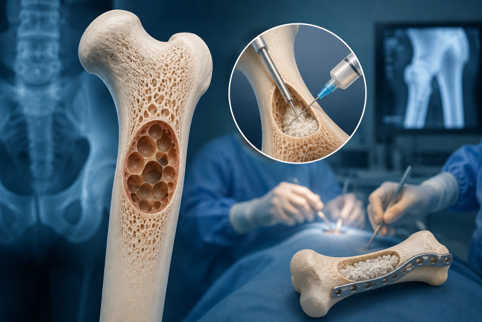
Types of Bone Cysts Treated by Dr. Aanchal Bhatia
Not all bone cysts are the same. Some are commonly seen in children and teenagers, while others may occur in adults.They can differ in their appearance on imaging and in how they affect the surrounding bone.

1. Unicameral Bone Cyst
Depending on its size, location and risk of fracture, a unicameral bone cyst may be monitored or treated.
2. Aneurysmal Bone Cyst
Treatment depends on factors such as the location and size of the cyst and whether it has affected the structural strength of the bone.
3. Other Cystic or Benign Bone Lesions
A specialist assessment helps determine whether the lesion is a simple bone cyst, an aneurysmal bone cyst or another type of bone tumour or lesion.
How Is a Bone Cyst Diagnosed?
A bone cyst may be discovered because of pain, swelling or a fracture, or it may be found incidentally during an X-ray performed for another reason.
Diagnosis usually begins with a detailed clinical assessment and review of the patient’s symptoms and medical history.
X-Ray
An X-ray is often the first investigation used to assess a suspected bone cyst. It can show the location, size and appearance of the lesion and whether the surrounding bone has become thin or weakened.
MRI or CT Scan
An MRI may be recommended when more detailed imaging is needed, particularly if the cyst is near a joint, involves surrounding soft tissues or has a complex appearance.
CT scans, on the other hand, give a sharper picture of the bone itself and can be useful for planning surgery in certain cases.
Biopsy
Not every straightforward bone cyst calls for a biopsy. But if the imaging doesn’t give a clear answer, or the lesion looks a bit unusual, taking a tissue sample may be the next step.
The aim is to establish an accurate diagnosis before deciding on treatment.
How Is the Right Treatment Decided?
Not every bone cyst needs immediate treatment. In some cases, regular monitoring with follow-up scans may be enough. In others, treatment may be recommended to relieve symptoms, strengthen the bone or reduce the risk of fracture.
The right approach depends on a number of factors, including:
- The type of cyst
- The patient’s age
- Its size and where it’s located
- Whether there’s pain, and how severe it is
- Whether the surrounding bone has weakened
- Any past fracture, or one that looks likely
- Whether the cyst is growing or has come back after previous treatment
- How close it sits to nearby joints or other important structures
Observation and Follow-Up
Injection Treatment
Curettage
Bone Grafting
Surgical Stabilisation
The goal is not simply to remove the cyst. Treatment also needs to consider the strength and function of the affected bone.
Recovery After Bone Cyst Treatment
Because of this, recovery isn’t tied to a fixed timeline. It depends on the type of treatment, the bone involved, and whether a fracture or reconstruction also needs to be addressed.
After treatment, patients may need:
Why Choose Dr. Aanchal Bhatia for Bone Cyst Treatment?
Bone lesions can vary widely, so accurate diagnosis is important before deciding whether observation or treatment is needed.
Dr. Aanchal Bhatia, a fellowship-trained orthopaedic oncologist, provides personalised care for bone and soft tissue tumours based on each patient’s diagnosis, imaging and treatment needs.
Patients may benefit from: