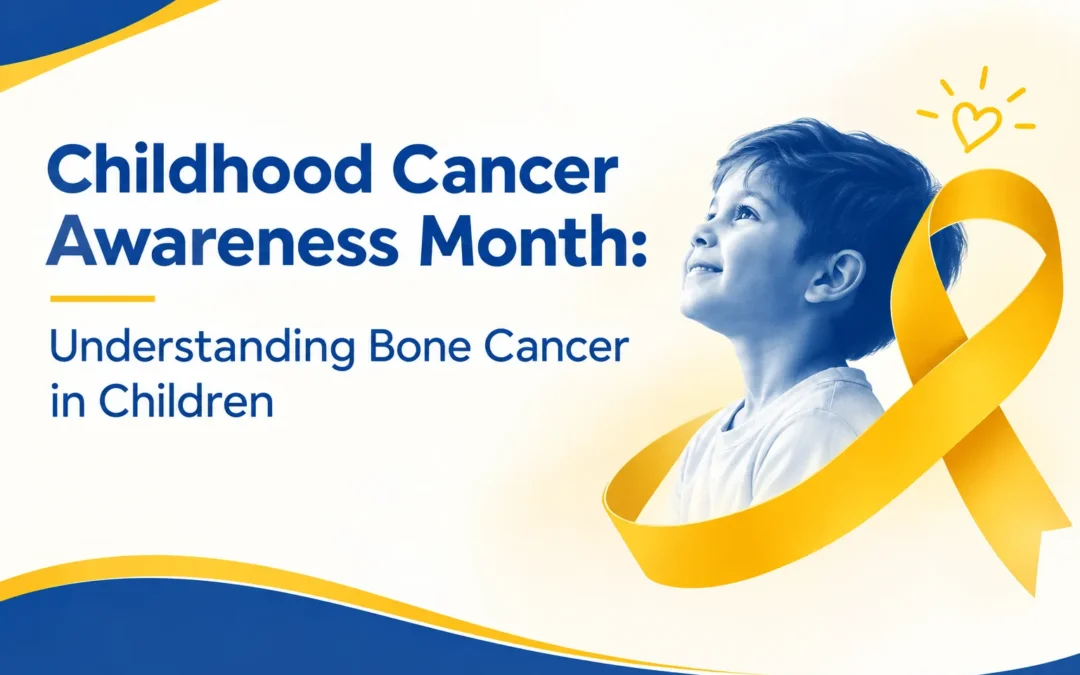
Every September, Childhood Cancer Awareness Month reminds us of the importance of recognising cancer in children and understanding its early signs.
Bone cancer is rare in children and can sometimes be mistaken for a sports injury or growing pains. Persistent pain, swelling, or other unusual symptoms should not be ignored. With advances in treatment, many children with bone cancer can receive effective care and return to active lives.
“Persistent bone pain or swelling in a child should be evaluated, especially when it does not improve or keeps getting worse.”
— Dr. Aanchal Bhatia
Types of Bone Cancer Commonly Seen in Children
A few specific bone cancers account for most childhood cases. They differ in where they tend to appear and which age group they affect. Tap each card below to learn more.
Bone cancers most often seen in children
Tap each card for where it strikes and who it affects most.
Osteosarcoma
Tap to expand
The most common bone cancer in children and teens. It usually starts near the ends of the long bones — most often around the knee (the thigh bone or shin) or the upper arm — where bone grows fastest. It’s most common during the teenage growth spurt.

Ewing Sarcoma
Tap to expand
The second most common childhood bone cancer. It can form in the bones — often the hips, ribs, or the middle of long bones — or in the soft tissue around them. It tends to affect children and young adults.

Chondrosarcoma
Tap to expand
A cancer that starts in cartilage (the smooth, cushioning tissue at the ends of bones). It’s much more common in adults and quite rare in children, but it’s part of the broader picture.
Osteosarcoma and Ewing sarcoma together make up the large majority of bone cancers diagnosed in children. Both are serious, but both are also treatable — especially when caught before they spread.
Signs and Symptoms of Bone Cancer in Children
The symptoms of childhood bone cancer can be subtle and easily blamed on everyday bumps and activity. That’s exactly why they’re worth knowing. The most common early sign is bone pain — which may come and go at first, then become more constant, and often feels worse at night or during activity.
Because children are naturally active and prone to knocks, a persistent ache is easy to dismiss. The key is persistence: pain or swelling that doesn’t settle over a couple of weeks deserves a proper look.
Symptoms worth taking seriously
- Bone or joint pain that won’t go away, particularly if it’s worse at night or after activity
- Swelling or a lump near a bone, which may feel warm
- A new limp, or trouble moving an arm or leg like usual
- A bone that breaks from something minor, like a small fall (a sign the bone may be weaker than it should be)
- Tiredness, fever, or weight loss that doesn’t have an obvious cause
- Pain that doesn’t ease up with rest or the usual pain relievers
Here’s the reassuring part: most kids with these symptoms don’t have cancer. Growing pains, sprains, and infections are all much more common explanations. Still, because catching bone cancer early makes a real difference in treatment, it’s better to have a doctor take a look at persistent or unexplained pain and swelling rather than wait to see if it goes away on its own.
Treatment Options for Childhood Bone Cancer
Treating bone cancer in children is a team effort, usually combining more than one approach. The exact plan depends on the type of cancer, where it is, whether it has spread, and the child’s age and overall health. Care is delivered by a multidisciplinary team — surgeons, oncologists (cancer doctors), and specialists working together.
Here’s how treatment typically unfolds, from diagnosis to recovery.
How childhood bone cancer is usually treated
A coordinated, step-by-step plan built around each child.
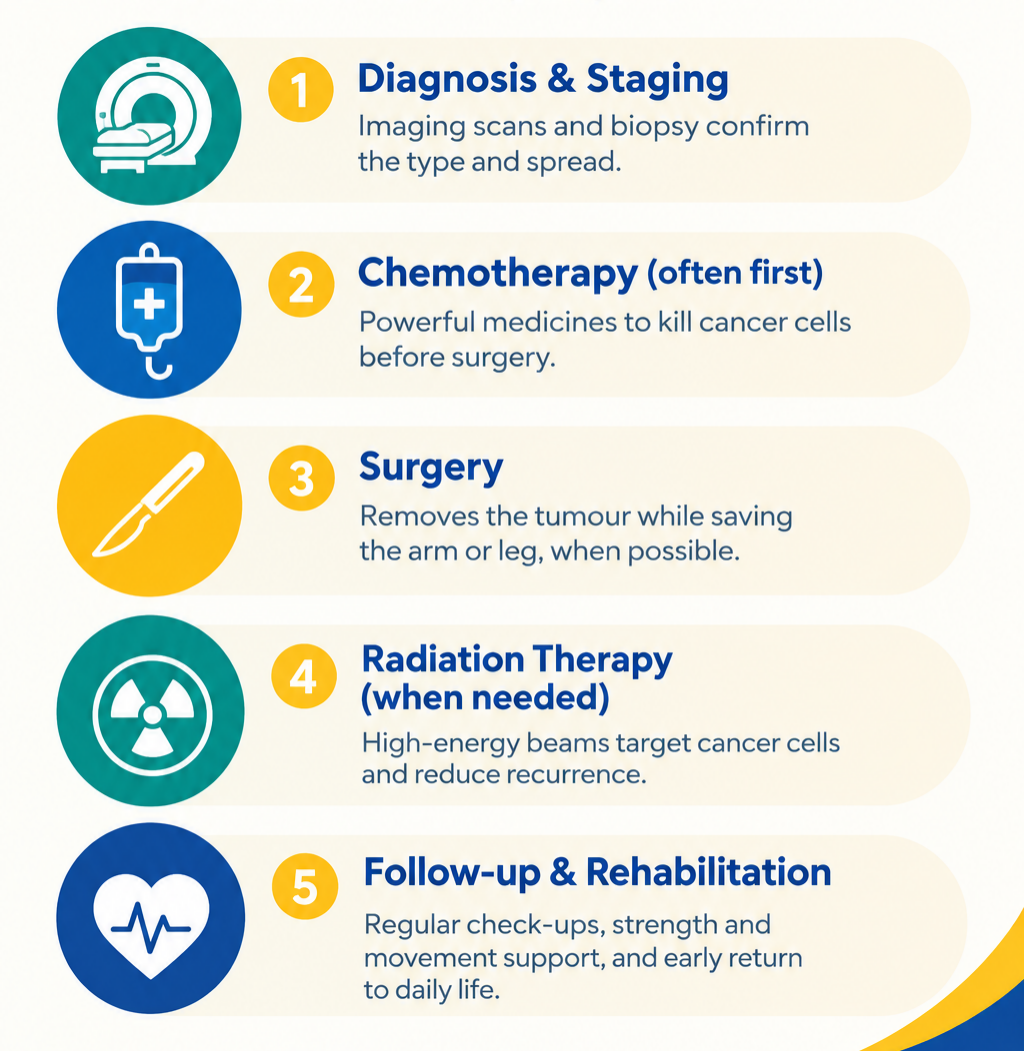
A generation ago, bone cancer in a limb often meant amputation. Thanks to modern imaging, chemotherapy, and surgical reconstruction, the American Cancer Society notes that most children with bone cancer in an arm or leg can now be treated with limb-sparing surgery rather than amputation — a huge leap forward for quality of life.
Can Bone Cancer in Children Be Treated Successfully?
Yes and this is the part families most need to hear. Outcomes for childhood bone cancer have improved dramatically over recent decades, especially when the cancer is found early and hasn’t spread to other parts of the body.
Survival is usually described using the 5-year survival rate — the percentage of children still alive five years after diagnosis. It’s a statistical guide, not a prediction for any one child, but it shows how treatable these cancers have become. The figures are strongest when the cancer is localised (still confined to where it started).
5-year survival when cancer is localised
Early, localised disease carries the most encouraging outlook.
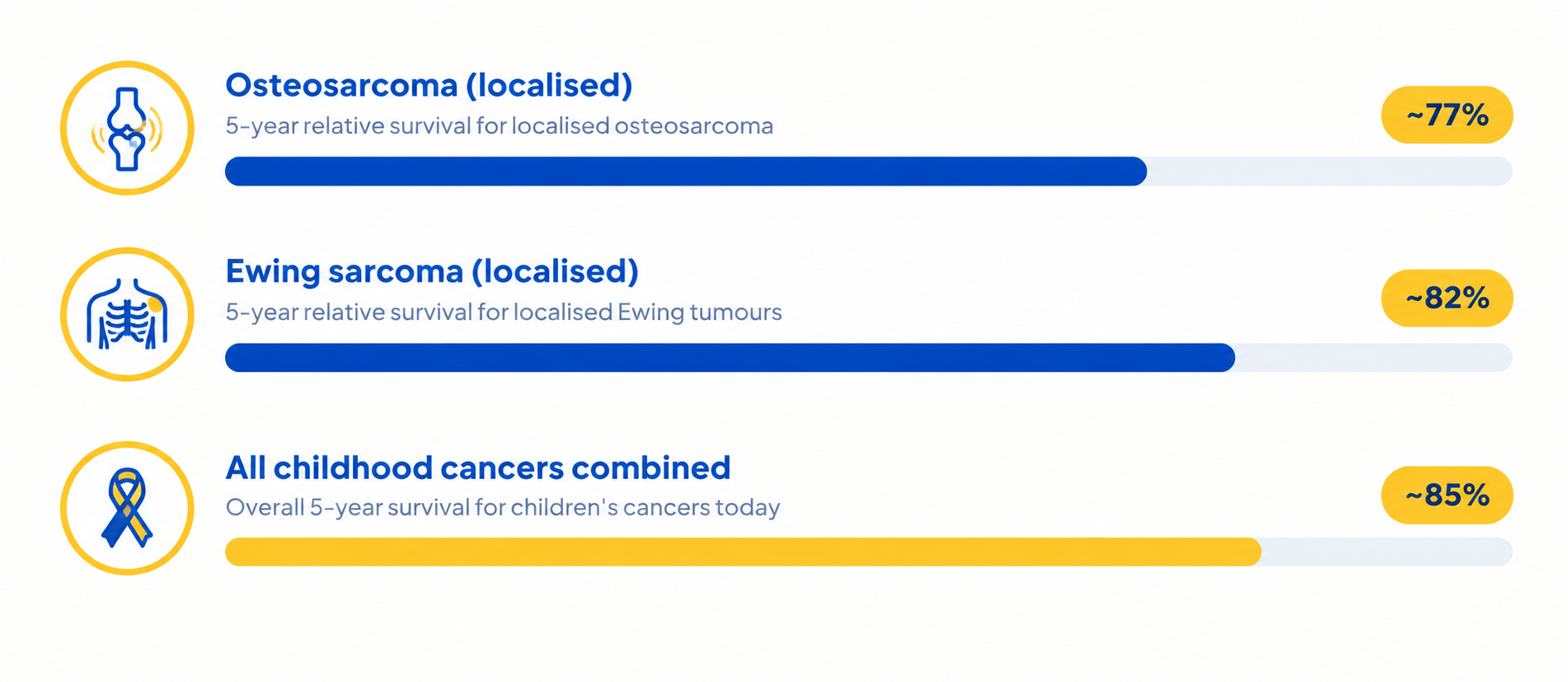
The takeaway for parents: a bone cancer diagnosis is frightening, but it is not the outcome it once was. With early diagnosis and specialist care, most children can be treated successfully — often keeping the affected limb and returning to an active childhood.
Frequently Asked Questions
What are the first signs of bone cancer in kids?
Bone or joint pain that lingers — especially at night or after activity — is often the first sign. You might also notice swelling, a new limp, or trouble moving the area normally. Occasionally, a bone breaks from something minor, like a small fall, which is worth paying attention to as well.
What's the most common type in children?
Osteosarcoma tops the list for kids and teens. Ewing sarcoma is another one to know about, since it also shows up in this age group and into young adulthood.
Can it be treated successfully?
Yes — a lot of children go on to recover well, particularly when the cancer is caught early, before it has a chance to spread. That said, every case is different, and how things unfold depends on the type of tumor, where it is, how advanced it is, and the child themselves.
How is it diagnosed?
It typically starts with imaging an X-ray or MRI to get a clear look at the bone. If something suspicious turns up, doctors will do a biopsy, taking a small sample of tissue to figure out exactly what they’re dealing with.