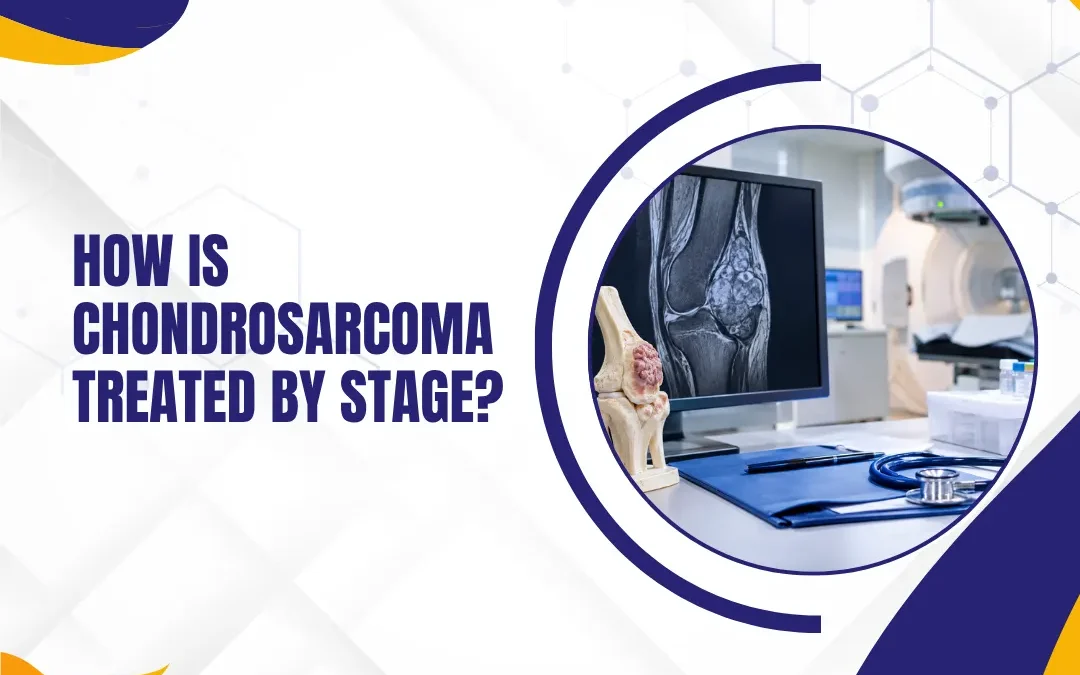
In chondrosarcoma, surgery carries most of the load, and the reason lies in the way the tumour is put together. Its tissue is dense and cartilage-based, and the tumour tends to respond poorly to chemotherapy and radiation compared with many faster-growing cancers. That leaves removal as the more dependable route in almost every case. What does shift is how much needs to come out. A small, low-grade tumour picked up early may only need the diseased tissue scraped away from the bone. As the grade or stage climbs, the surgery grows alongside it, at times becoming a full resection combined with reconstruction, or extra therapy aimed at the more aggressive cells.
According to Dr. Aanchal Bhatia, orthopedic oncologist in Bangalore, “People expect chemo to be part of the plan because that’s what cancer treatment usually looks like. With chondrosarcoma, grade decides almost everything about how the surgery gets done.”
How Does Chondrosarcoma Grade Decide the Type of Surgery?
Grade shapes this decision more than it does for most other bone cancers.
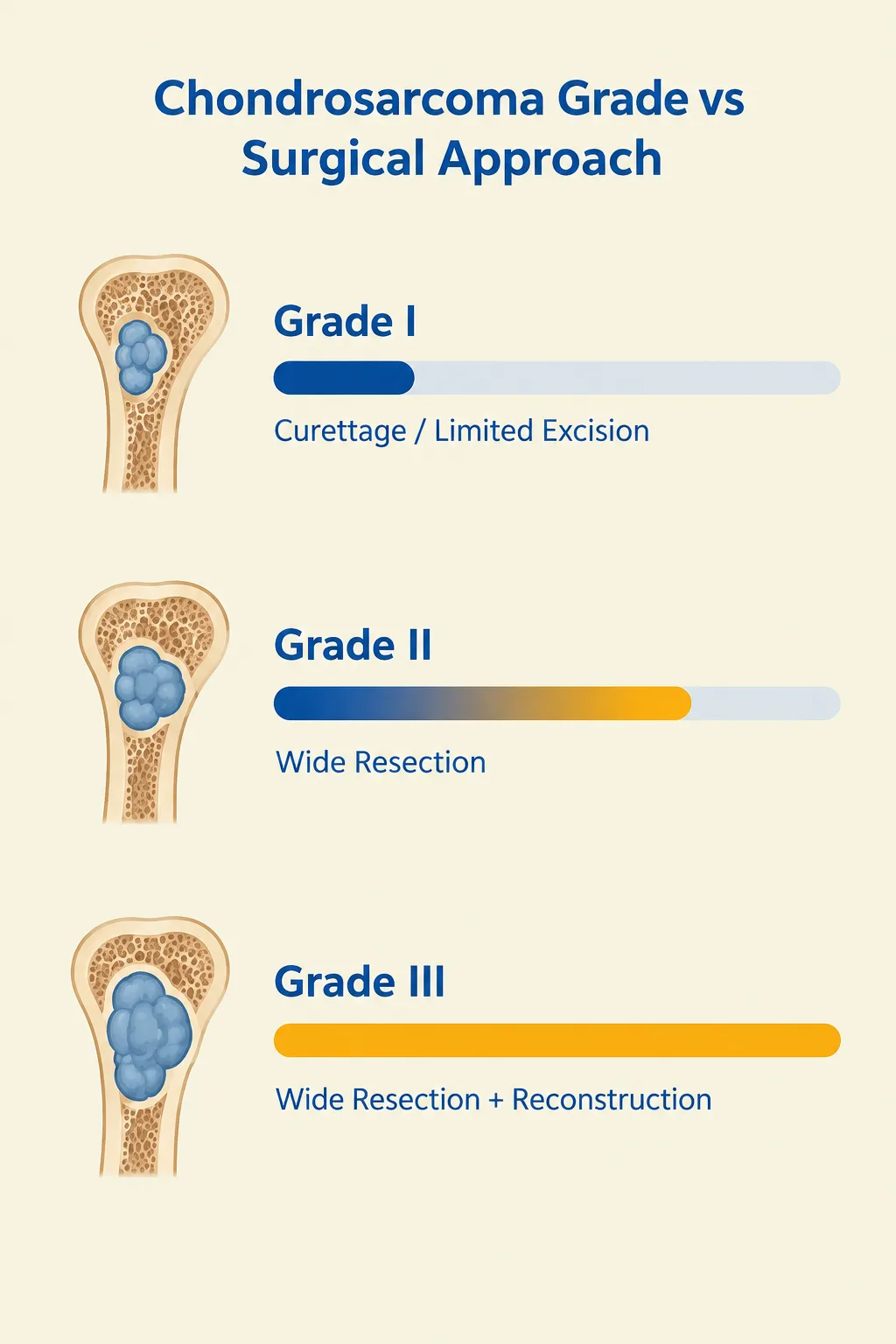
Low-grade tumours account for the majority of chondrosarcoma diagnoses, which is why curettage turns out to be the answer far more often than most patients expect when they walk in. There is one exception worth keeping in mind, though. A subtype known as dedifferentiated chondrosarcoma conceals pockets of aggressive, high-grade cells within what otherwise looks like a slow-growing tumour. Once that mix appears, the treatment plan has to address both parts together, and chemotherapy is sometimes brought back into consideration despite chondrosarcoma’s usual resistance to it.
Wondering which surgical approach fits your specific case? The bone cancer treatment in Bangalore page walks through how grade and stage shape the surgical decision.
Chondrosarcoma treatment isn’t one-size-fits-all. Get your grade and stage confirmed before deciding on surgery.
What Does Recovery Look Like After Chondrosarcoma Surgery?
Doctors generally sort chondrosarcoma into one of three stages, and the scope of surgery widens with each one.
Stage IV is the exception: treatment itself changes, not just recovery, since systemic treatment runs alongside surgery for the primary tumour. The table below shows how hospital stay and monitoring differ by stage.
|
Stage |
Typical Hospital Stay |
Approximate Return to Normal Activity |
|
I |
2 to 3 days |
4 to 6 weeks |
|
II |
4 to 5 days |
8 to 10 weeks |
|
III |
5 to 7 days |
3 to 4 months, longer with reconstruction |
|
IV |
Varies with systemic treatment |
Ongoing, based on response |
Stage I: Follow-up imaging every six months for the first two years. Recurrence is uncommon at this stage, but scans catch it early if it happens.
Stage II: Monitoring runs tighter, closer to every three to four months. The higher recurrence risk at this grade is why follow-up stays more frequent here.
Stage III: Follow-up covers both the surgical site and the chest. Metastatic risk climbs enough at this stage that lung imaging becomes part of routine monitoring.
Stage IV: Monitoring shifts toward tracking response to systemic treatment. The focus moves from the original site to how the disease is responding overall.
This same reasoning runs through how bone cancers are staged in general, not chondrosarcoma alone. Our post on what the stages of bone cancer mean explains how grade and spread come together to set that stage in the first place.
Why Choose Dr. Aanchal Bhatia for Chondrosarcoma Treatment in Bangalore?
Dr. Aanchal Bhatia is a fellowship-trained orthopedic oncologist whose training in Musculoskeletal Oncology at Max Super Speciality Hospital, Saket, included experience with cartilage-forming tumours such as chondrosarcoma. In these cases, achieving a clean surgical margin on the first attempt carries more weight than it does with cancers where chemotherapy can serve as a backup.
Each treatment plan is built around the individual patient, with grade, location, and imaging findings worked through case by case rather than fitted to a standard protocol. The aim is a plan that reflects what that particular tumour requires, and what the patient needs to recover well.
Frequently Asked Questions
1. Does chondrosarcoma respond to chemotherapy?
Only rarely, and that is precisely why surgery shoulders most of the treatment here rather than being paired with drug therapy the way many other cancers are.
2. What surgery is used for low-grade chondrosarcoma?
Curettage handles the majority of low-grade cases. Cryotherapy or bone cement often follows to reduce the chance of the tumour returning.
3. Is dedifferentiated chondrosarcoma treated differently?
Yes. High-grade cells sitting within an otherwise low-grade tumour behave aggressively enough that chemotherapy sometimes re-enters the plan for this subtype in particular.
4. Can chondrosarcoma come back after surgery?
Recurrence is possible, especially if any tumour tissue is left behind or the grade sits higher than Stage I. That is the main reason wide resection becomes the preferred route once the disease moves beyond the earliest stage.
Reference
Disclaimer: This article is for educational purposes only and does not replace professional medical advice; please consult a qualified orthopedic oncologist for diagnosis and treatment.