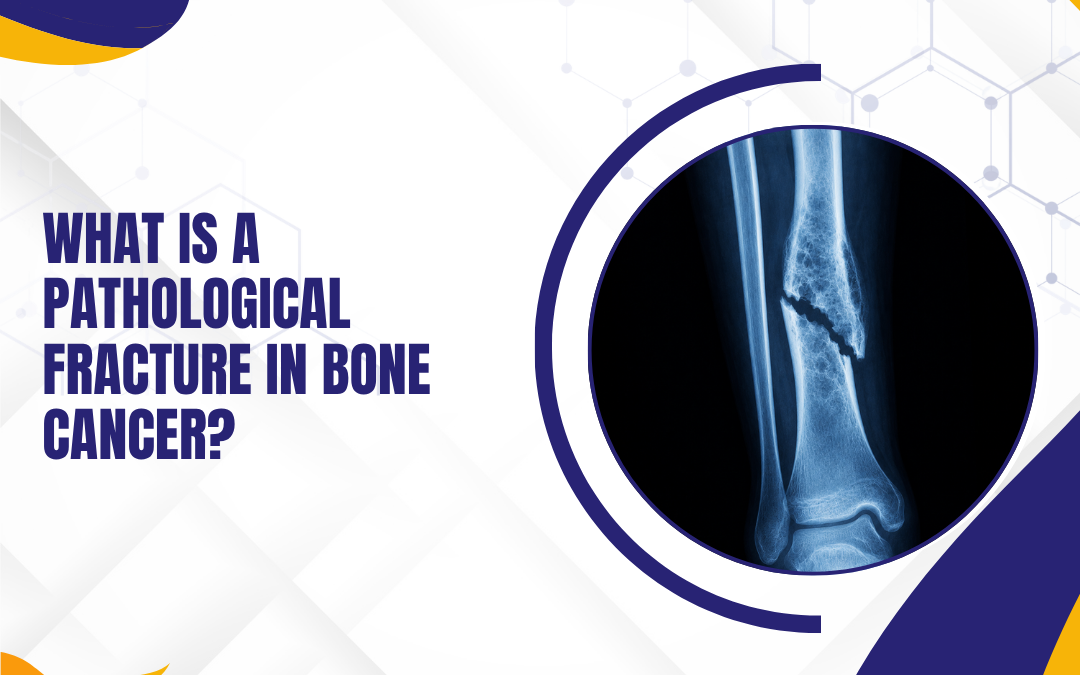
A pathological fracture isn’t the result of a hard fall or a bad accident. It happens when a bone has been hollowed out by disease to the point where ordinary life, a cough, stepping off a kerb, turning over in bed, is enough to break it. In bone cancer, that process happens quietly over weeks. The pain was there the whole time, but it looked like something else. By the time the bone gives way, the tumour has usually been present far longer than anyone realised.
According to Dr. Aanchal Bhatia, orthopedic oncologist in Bangalore, “A fracture that doesn’t match the injury is never just a fracture. When a bone breaks from a fall that shouldn’t have caused one, we look at the bone before we look at the break. The tumour was there first.”
How Does Bone Cancer Lead to a Pathological Fracture?
The damage builds quietly. The fracture is just when it becomes impossible to ignore.
Tumour growth hollows the bone from inside: Nothing shows on the surface. The tumour steadily replaces structural bone tissue from within, and the bone loses its ability to bear load without any visible warning. By the time it fractures, the damage has been accumulating for weeks, sometimes longer.
Metastatic disease is particularly destructive: Breast, lung, prostate, kidney, and thyroid cancers that reach the bone don’t just sit there. They create osteolytic lesions, areas where the bone is actively dissolving. A fracture in someone with a known cancer history isn’t a routine orthopaedic problem. It needs oncological review first, not a cast and a six-week follow-up.
The femur, spine, and humerus carry the most risk: These are the bones that take the most punishment in daily life, which is why they’re first to go. A vertebral collapse from bone metastasis needs to be treated with urgency because cord compression can develop fast, and when it does, it becomes a surgical emergency.
Pain almost always comes before the break: Weeks of aching at the same spot, dismissed as arthritis, age, or a muscle problem. For many patients, the fracture is the first time that bone gets looked at properly. It’s also the most avoidable part of the whole sequence.
For specialist evaluation, learn more about bone cancer treatment.
Bone broke without a clear reason? See a specialist before it gets treated as an ordinary fracture.
How Is a Pathological Fracture Diagnosed and Managed?
The fracture opens the investigation. It doesn’t close it.
Imaging goes further than the break: The X-ray shows where the bone broke. MRI and CT show what caused it and how far the lesion has spread into surrounding tissue. A PET-CT follows if there’s any concern about disease at other sites. The fracture itself is secondary. What’s in the bone around it is what needs answering.
Biopsy before surgical fixation: If there’s no confirmed tissue diagnosis, the biopsy has to come before anything is fixed. Operating on a bone without knowing what’s in it can permanently close off surgical options and compromise the field for everything that follows. That order isn’t flexible.
Surgical stabilisation follows the diagnosis: Once the tissue type is confirmed, the fracture is stabilised with a nail, plate, or endoprosthetic reconstruction matched to the tumour’s location and what bone is left. The goal is function and pain relief, running in parallel with systemic treatment, not waiting until after.
Surgery and systemic treatment run together: The operation manages the fracture site. Chemotherapy, radiotherapy, or targeted therapy manages the disease. Handling one without the other leaves the remaining skeleton exposed to exactly the same risk.
For more on how bone cancer presents before complications develop, read about early symptoms and what to watch for.
Why Choose Dr. Aanchal Bhatia for Pathological Fracture Treatment in Bangalore?
Dr. Aanchal Bhatia completed her MS in Orthopaedics at Ramaiah Medical College and her Fellowship in Musculoskeletal Oncology at Max Super Speciality Hospital, Saket, New Delhi, with specific training in bone tumour surgery and its complications. She holds membership with the Indian Musculoskeletal Oncology Society (IMSOS), has 12 peer-reviewed publications, and limits her practice entirely to bone and soft tissue tumour cases. Pathological fractures here aren’t treated as isolated orthopaedic events. Every case goes through tumour board review before a surgical plan is made.
Tissue diagnosis comes before fixation, every time. Reconstruction is matched to the tumour’s extent and the broader systemic treatment plan, not decided in isolation. Post-operative care runs in coordination with oncology from the start. For patients in Bangalore dealing with an unexplained fracture, or a fracture against a backdrop of known cancer, getting to the right specialist early is what keeps every option open. Call 9289099511 to book your consultation.
Frequently Asked Questions
1. What is a pathological fracture?
A fracture caused by disease weakening the bone, not by significant trauma.
2. Can a pathological fracture be the first sign of bone cancer?
Yes, for some patients it’s the first visible sign of an underlying tumour.
3. Is surgery always needed for a pathological fracture in bone cancer?
In most cases yes, to stabilise the bone and restore function.
4. How is a pathological fracture different from a stress fracture?
A stress fracture comes from overuse; a pathological fracture comes from disease inside the bone.
5. Can a pathological fracture heal on its own?
Unlikely. Without treating the underlying disease first, the bone won’t heal the way a normal fracture would.
Reference
Disclaimer: This article is for educational purposes only. Consult a qualified orthopedic oncologist if you have sustained a fracture without a clear cause or have persistent bone pain with a known cancer history.