
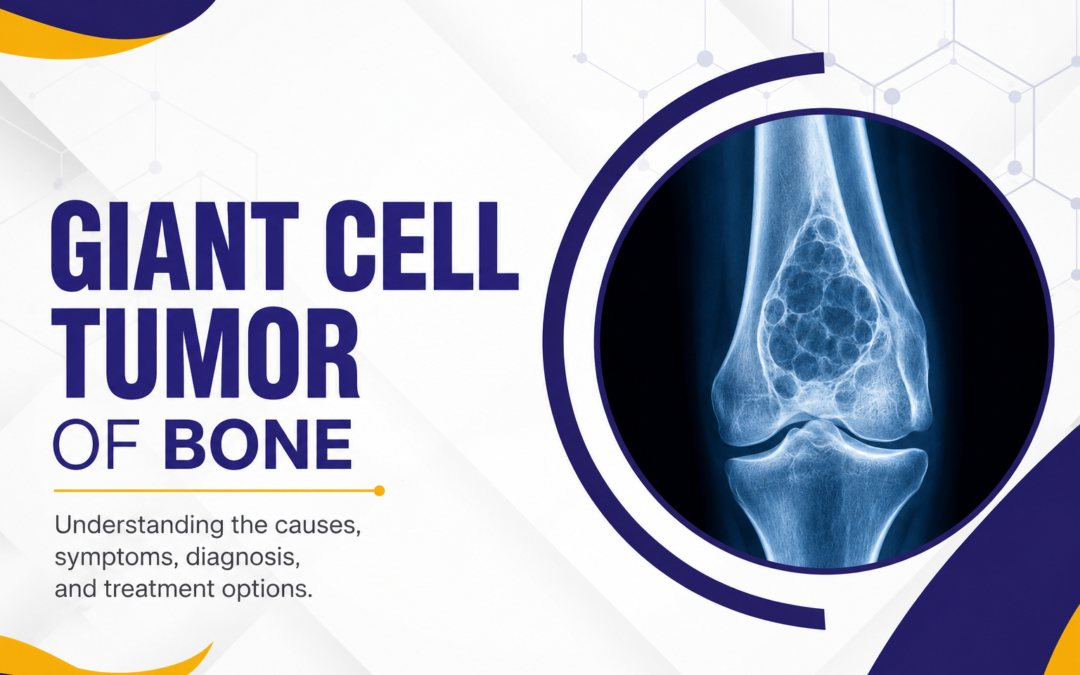
Have you been dealing with bone pain that just won’t go away, or noticed swelling near a joint even though you haven’t injured yourself? Most of the time, symptoms like these turn out to be common orthopedic issues. But every so often, they point to something less familiar: a Giant Cell Tumor (GCT) of Bone. It’s rare, usually not cancerous, and yet it can still cause real damage to the bone if it’s left untreated for too long.
The word “tumor” tends to alarm people the moment they hear it, and that’s understandable. But here’s the reassuring part: most Giant Cell Tumors are benign. With a timely diagnosis and the right treatment plan, most patients go on to recover well and return to their normal activities. In this blog, we’ll walk through what a Giant Cell Tumor of Bone actually is, the symptoms to look out for, how it’s treated, and what recovery tends to look like.
“Persistent bone pain should never be dismissed as ‘just a strain.’ Timely evaluation by a bone specialist can help with early diagnosis, preserve bone, protect joint function, and support better long-term outcomes.” — Dr. Aanchal Bhatia, Orthopedic Oncology Surgeon
What Is a Giant Cell Tumor of Bone?
A Giant Cell Tumor of Bone is an uncommon growth that develops near the ends of long bones, often close to major joints such as the knee or wrist. It’s usually benign, but that doesn’t mean it’s harmless. Left unchecked, GCT can behave aggressively, gradually eroding healthy bone and affecting the nearby joint.
Over time, the weakened bone becomes more prone to fractures, and joint movement can become limited. In a smaller number of cases, the tumor can return after treatment, spread to the lungs, or, rarely, become malignant. This is why early medical attention can make such a difference.
What Are the Symptoms of Giant Cell Tumor of Bone?
Symptoms develop gradually and may initially be confused with a sports injury or a normal joint condition. If these signs and symptoms occur, an orthopedic oncology evaluation may help determine whether a closer look is necessary.
Here’s what to watch for:
- Persistent pain near a joint
- Swelling around the affected bone
- Difficulty moving the nearby joint
- Stiffness or a reduced range of motion
- Pain that gets worse with activity
- A noticeable lump, in some cases
- A sudden fracture from a minor injury due to weakened bone
Bone pain that persists for several weeks and does not get better should not be ignored.
What Causes Giant Cell Tumor of Bone?
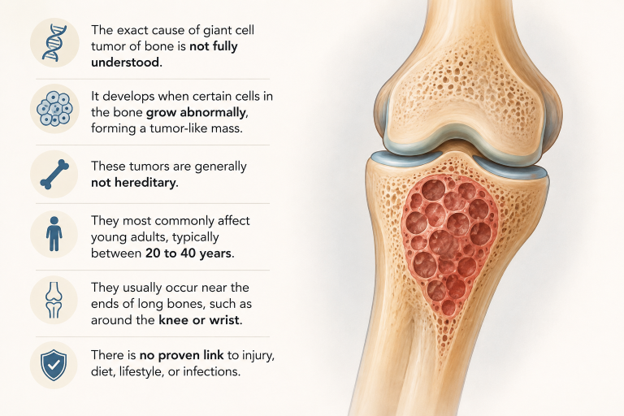
Giant cell tumor of bone has no clearly known cause and develops from abnormal cell growth within the bone.
Treatment Options for Giant Cell Tumor of Bone
There’s no one-size-fits-all treatment. Doctors weigh a few things before deciding on the right approach:
- Size of the tumor
- Its location
- How much bone destruction has occurred
- Whether the joint is involved
- The risk of recurrence
With that in mind, here are the treatment options typically considered:
- Curettage
The surgeon removes the tumor from inside the bone, taking care to preserve as much healthy bone as possible. Additional techniques may be used to help reduce the risk of the tumor returning.
- Bone Grafting or Bone Cement
Once the tumor is removed, the empty cavity is filled in — usually with a bone graft or bone cement — to give the area back its strength and structural support.
- Wide Surgical Removal
For tumors that are large or have come back after previous treatment, it may be necessary to remove that section of bone entirely. Reconstruction is then used to restore as much function as possible.
- Targeted Medication
In some cases, medication is given ahead of surgery to shrink the tumor or used when surgery isn’t an immediate option.
At the end of the day, the treatment plan comes down to the individual, their specific tumor, and what they need functionally going forward.
How Is Giant Cell Tumor of Bone Diagnosed?
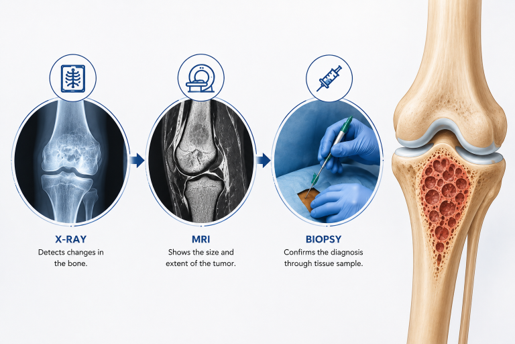
Key Takeaway
A combination of clinical and imaging assessment is required to correctly diagnose Giant Cell Tumor of Bone. While X-rays, MRIs and CT scans provide doctors with a good idea of the extent of the tumor’s size and spread, a biopsy is still the definitive way to confirm the diagnosis and determine guide treatment planning.
Recovery After Treatment
- Recovery is different for everyone and depends on the tumor’s location, the extent of surgery, and how the body heals.
- Pain usually gets better gradually as the body recovers after surgery.
- Physiotherapy can help improve strength, flexibility, and joint movement.
- Getting back to normal activities may take a few weeks to a few months, depending on the individual recovery.
- Regular follow-up visits are important to check bone healing and monitor for any signs of the tumor coming back.
Can Giant Cell Tumor of Bone Come Back?
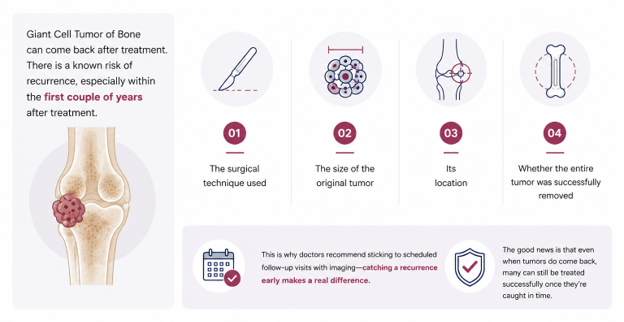
Regular follow-up is key. Scheduled visits and imaging help detect any recurrence early, improve outcomes, and support long-term recovery.
Conclusion
A Giant Cell Tumor of Bone is typically not cancerous, but that’s no reason to take it lightly. If left untreated, it can weaken the bone, put stress on nearby joints, and increase the risk of fractures or recurrence later on.
The encouraging part is how far imaging, surgical techniques, and follow-up care have come, and outcomes have improved a great deal because of these advances. If bone pain or swelling has been getting in the way of your daily life, an early evaluation by an orthopedic oncology specialist could genuinely make a difference.
Frequently Asked Questions
Is a Giant Cell Tumor of Bone the same as bone cancer?
Can it spread to other parts of the body?
Will I always need surgery?
Can a Giant Cell Tumor of Bone become cancerous?
Reference
Disclaimer: This article is for educational purposes only. Consult a qualified orthopedic oncologist if your child has persistent bone pain, fever without a clear cause, or any unexplained swelling near a bone.